
Reposted from: https://www.earthisland.org/journal/index.php/articles/entry/for-republicans-states-rights-are-a-one-way-street
May 19, 2026
Picture the worst depredations of industrial meat production, and you might envision practices such as veal crates that confine calves in tiny boxes to keep their meat tender, laying hens close together in small wire cages, pregnant pigs stuck in gestation stalls so narrow that they can barely turn around for comfort. In 2018, California voters outlawed such cruelty when they approved the Farm Animal Confinement Initiative, which prohibited the sale of meat produced with those methods. The vote wasn’t even close: Nearly 63 percent of Golden State voters cast a ballot in favor of the measure. The initiative’s passage represented a modest victory for the humane treatment of animals.
The egg industry has largely acceded to the will of voters. The pork industry, meanwhile, has waged a multi-year campaign to roll back the California initiative, evidently working from the cruel logic that every extra square foot of space for livestock leads to some small reduction in profits.
The Pork Producers Council — an agribusiness lobby led by massive conglomerates like Smithfield and Tyson Foods — took its effort all the way to the US Supreme Court, which heard the issue in 2023. The justices ended up ruling in favor of the California measure, which, they concluded in a five-to-four decision, did not violate the Constitution’s rules on interstate commerce. “While the Constitution addresses many weighty issues,” Justice Neil Gorsuch wrote, “the type of pork chops California merchants may sell is not on that list.”
Now, the giant corporations that control some 70 percent of the US pork supply are angling for a work-around, and they’re recruiting members of Congress to their cause.
In April, the House of Representatives passed the latest version of the Farm Bill, and it includes a provision, disingenuously yet piquantly titled the Save Our Bacon Act, that would override animal welfare measures like the one approved in California. Congressional Republicans’ efforts to cancel the will of California makes me wonder: Are conservatives genuine in their commitment to state rights? Or is the whole conservative notion of states rights just a rhetorical cover for a retrograde agenda?
“The reason we’ve seen such a backlash from Big Pork is that they are just very upset that they’re not able to raise animals in this way,” says Allie Granger, a policy advisor at the Animal Welfare Institute, which is part of a broad coalition of environmental, food safety, and animal rights groups focused on defeating the attempted federal preemption of the California standards. Granger warned that the Save Our Bacon provision is so broadly worded that it could nullify many other state laws around meat labeling, animal disease control, and livestock importation. Indeed, according to a Harvard University study, more than 600 state-level livestock and meat laws could be preempted if the House version of the Farm Bill becomes law.
Joe Maxwell — a Missouri farmer who raises sheep, pigs, and chickens, and who is the cofounder of Farm Action — is concerned about how federal preemption of the animal welfare standards could impact small-scale producers like himself. According to Maxwell, more than one-quarter of independent hog farmers have already made investments and changed their operations to meet the California standards. A rollback now would leave them with stranded costs. “The US Senate needs to visit with our farmers, some of [whom] have spent and borrowed money to make those conversions,” said Maxwell, who took time out from the busy lambing season to share his views.
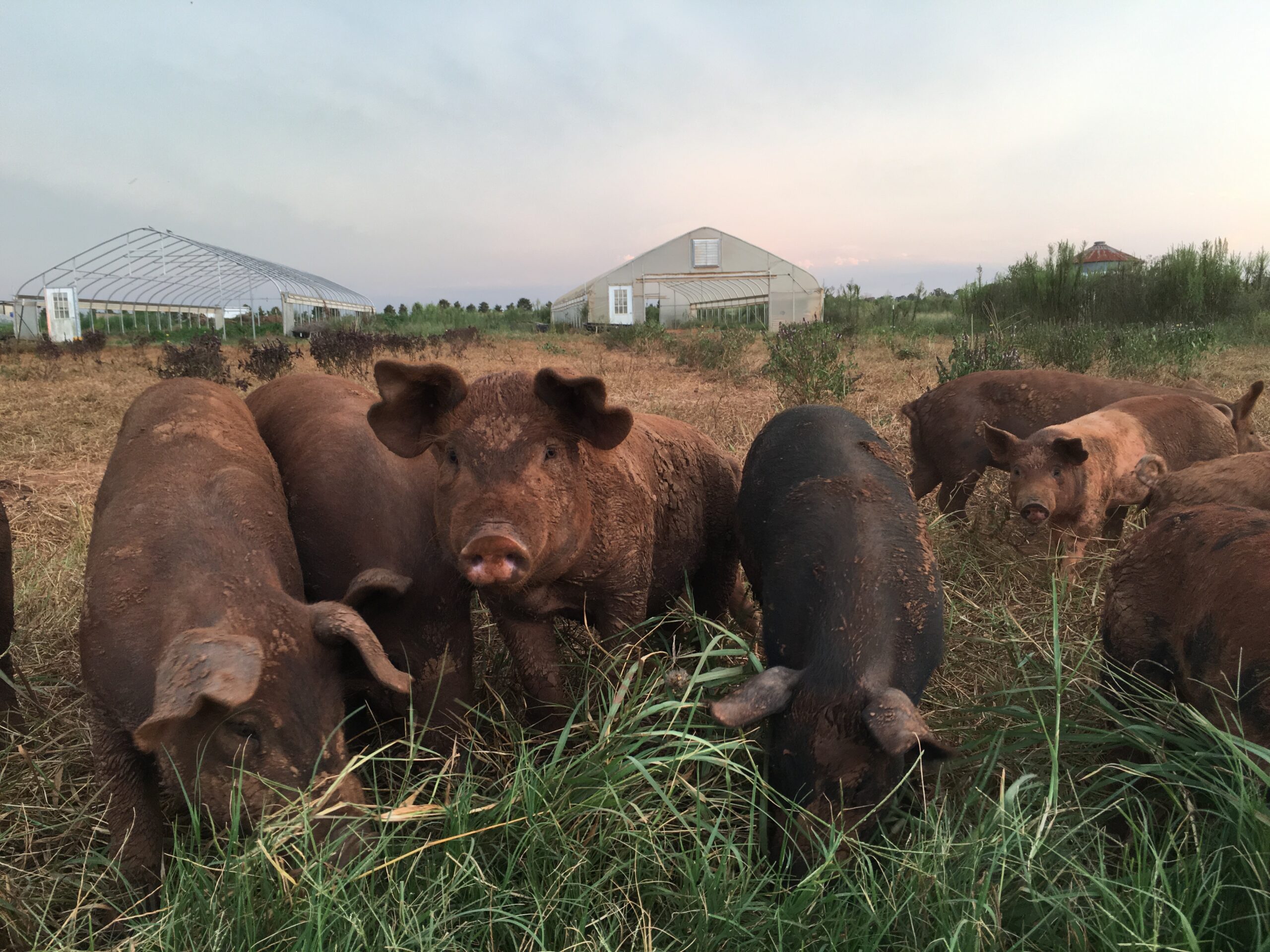
More to the point, Maxwell said, small-scale farmers who don’t participate in what you might call the protein sharecropping system — in which farmers do little more than operate their farms according to the contract specifications laid down by meat packers — understand that it’s unnecessary to torture animals to produce meat. “Our farm has never crated a mama pig most all of her life,” he said. “My granddad would have beat me if he thought that’s what I would do to an animal.”
The Save Our Bacon provision is unlikely to become law. The Farm Bill needs 60 votes to pass the Senate, and there are already a good number of Democratic senators on the record opposing the measure. But even if this attempted attack on animal welfare never becomes federal policy, it’s still an illustrative example of federal politics — as the whole affair helps to reveal the bogus ways in which Republicans often employ the principle of states’ rights.
Among American political conservatives, the idea that states are a direct representation of popular will — whereas the federal government is supposedly a Leviathan-like danger to liberty — is received wisdom. States rights is the ultimate shibboleth of conservative ideology. States’ ability to govern their own affairs is sacrosanct … until, well, it’s not. The tussle over animal welfare standards makes this plain.
With the Save Our Bacon provision, Republicans are arguing that politicians in Washington, DC, should veto the will of California voters. You can also see the double standard at play in Republicans’ attacks against the Vermont and New York “climate superfund” laws, as GOP representatives in DC maneuver to strike down those state-level efforts to recoup damages from extreme weather events.
Evidently — at least according to Republicans’ positions on actual policy — states’ rights are a one-way street. If a state seeks to weaken health, safety, or environmental standards, then it’s OK. But if a state wants to strengthen health, safety, or environmental rules above the national standard, then it’s a no-go. In this way of thinking, states’ rights can encourage a race to the bottom, but never a race to the top.
For evidence of how the concept of states’ rights is more of an à-la-carte ideology than a bedrock political principle, just look at the wishy-washy positions of Representative Ashley Hinson, the Iowa Republican who is the lead sponsor of the Save Our Bacon Act. Back in 2023 (when a Democrat was in the White House), she expressed support for an Iowa law that banned transgender females from competing in girls’ high school sports, telling an Iowa newspaper, “We should not be allowing the federal government to preempt our states’ rights here to protect girls’ athletics statewide.”
Now, however, Hinson believes we should be allowing the federal government to preempt states’ rights to protect livestock from wanton cruelty. Might this flip-flop have something to do with the fact that agribusiness is a significant contributor to Representative Hinson’s campaign coffers? It turns out corporate interests are one thing that can trump the inviolable principle of states’ rights.
Pointing out Hinson’s double standard is an easy gotcha. But for progressive environmentalists, there’s a bigger takeaway here, and it has to do with the idea of states as the laboratories of democracy, to borrow a phrase from the early-twentieth-century Supreme Court Justice Louie Brandeis.
If conservatives have reified state governance, progressives all too often have reified federal governance. But in an era in which conservatives — if not outright authoritarians — control all three branches of the federal government, and the White House is dismantling the administrative state, progressives need to rethink their long-standing preoccupation with federal authority as the best vehicle for promoting the public interest.
A name for this approach is “progressive federalism.” In a best-case scenario, the federal government guarantees certain basic rights and sets certain minimum standards for human and environmental safety — and then states can go above and beyond those standards should they wish. This is, more or less, how our political system already works. Deep-green Washington State has stricter environmental policies than oil-soaked Louisiana. States governed by Democrats have, in general, stronger workplace protections and tougher anti-discrimination policies. Yet most progressives still seem fixated on what happens in Washington, DC.
The fight over animal welfare — and, especially, the Supreme Court’s affirmation of the constitutionality of the California measure — points toward a different political strategy. Progressives should reinvest in local and state government to develop laws and policies that can then be models for the rest of the country. If those laws can pass what you might call the “Gorsuch pork producers test,” they could, over time, become the de-facto national standards. State action can slowly but surely move the whole nation in a more progressive direction.
This vision of decentralized decision-making fits neatly with environmentalists’ long-standing preference for the small and the local. Conservatives are right when they complain that Washington, DC, is out of touch — especially when each US representative represents some 761,000 people. Just by virtue of size and scale, state government is more responsive, more accountable, and more democratic. It might also end up being more green, and more humane.
Jason Dove Mark