
Reposted from: https://civileats.com/2026/05/28/the-farm-bill-is-no-place-for-big-porks-save-our-bacon-act/
May 28, 2026
As the Senate works through the draft of the updated farm bill, controversies continue to surface over key provisions, including language from the so-called Save Our Bacon (SOB) Act.
Approved in the House farm bill, the act would override states’ authority to restrict the sale of meat based on animal welfare standards. Senate Agriculture Committee Chair John Boozman (R-Arkansas) has said that SOB Act language won’t be in the Senate draft, expected to be released the first week of June. But whether the draft emerges from committee without that language is still very much a question.
The pork industry and its allies in Congress have been trying to overturn state-approved livestock standards for years, and defenders of the SOB Act signaled just this week that they’ll try to reintroduce it during the Senate ag committee’s markup of the bill over the coming weeks. Not only that, but for the farm bill to become law, both the House and Senate will have to align their versions—another hurdle positioning the SOB Act to be a major battle in an already controversial farm bill.
Here’s why the act should stay out.
If included, it would reverse popular, consumer-driven state laws like California’s Proposition 12 (passed with 63 percent of the vote in 2018) and Massachusetts Question 3 (passed with 78 percent of the vote in 2016), which set minimum production standards and animal welfare standards for hogs, egg-laying chickens, and veal sold within their state borders. These laws set out to end cruel and restrictive confinement practices, including gestation crates—narrow cages used to confine pregnant sows, so small that the sows can’t turn around.
But it gets worse.
According to a recent Harvard Law School analysis, the SOB Act “could affect or nullify hundreds of state laws and regulations.” That includes importation laws in every state put into place years ago to prevent the spread of economically devastating livestock diseases; quality and safety standards for milk sold in multiple states; and oversight of labeling of imported seafood in Louisiana and similar laws in Texas, enacted to protect those states’ critical seafood industries. In North Dakota, it could even reverse laws preventing the sale of hides from animals infected with anthrax.
The Big Pork interests pushing the SOB Act claim they’re speaking on behalf of small farmers, who, they say, are unable to meet higher state standards. They suggest that farmers across the country prefer to return to a time when there were no humane standards.
In reality, nothing is further from the truth. If the SOB Act is included in the farm bill, it will be a death knell for small and medium-scale U.S. hog farmers like me—and meat, poultry, and even seafood producers as well—while eradicating consumer choice and threatening state rights.
The Case Against Confinement
I’m a fifth-generation hog farmer from Osage County, Missouri. For years, I kept my pigs in an industrial-style production system. I ran roughly 2,400 hogs a year through a highly concentrated system with just a few square feet of space allowed per pig, and as required by this type of intensive production, I dosed them regularly with antibiotics to prevent infections from spreading.
In 1989, one of my pigs gored me in the leg. The cut became infected, but the antibiotics the doctors gave me didn’t touch it. After eight rounds of antibiotics and two months of the stubborn infection, my injury started going septic. I pushed my doctors to treat me for the same antibiotic-resistant strain of Streptococcus suis that my veterinarian had found in deceased pigs from my barn. Only then did my infection clear. I realized that the cramped production system that I was using to raise my hogs was not only bad for them, it had very nearly killed me.
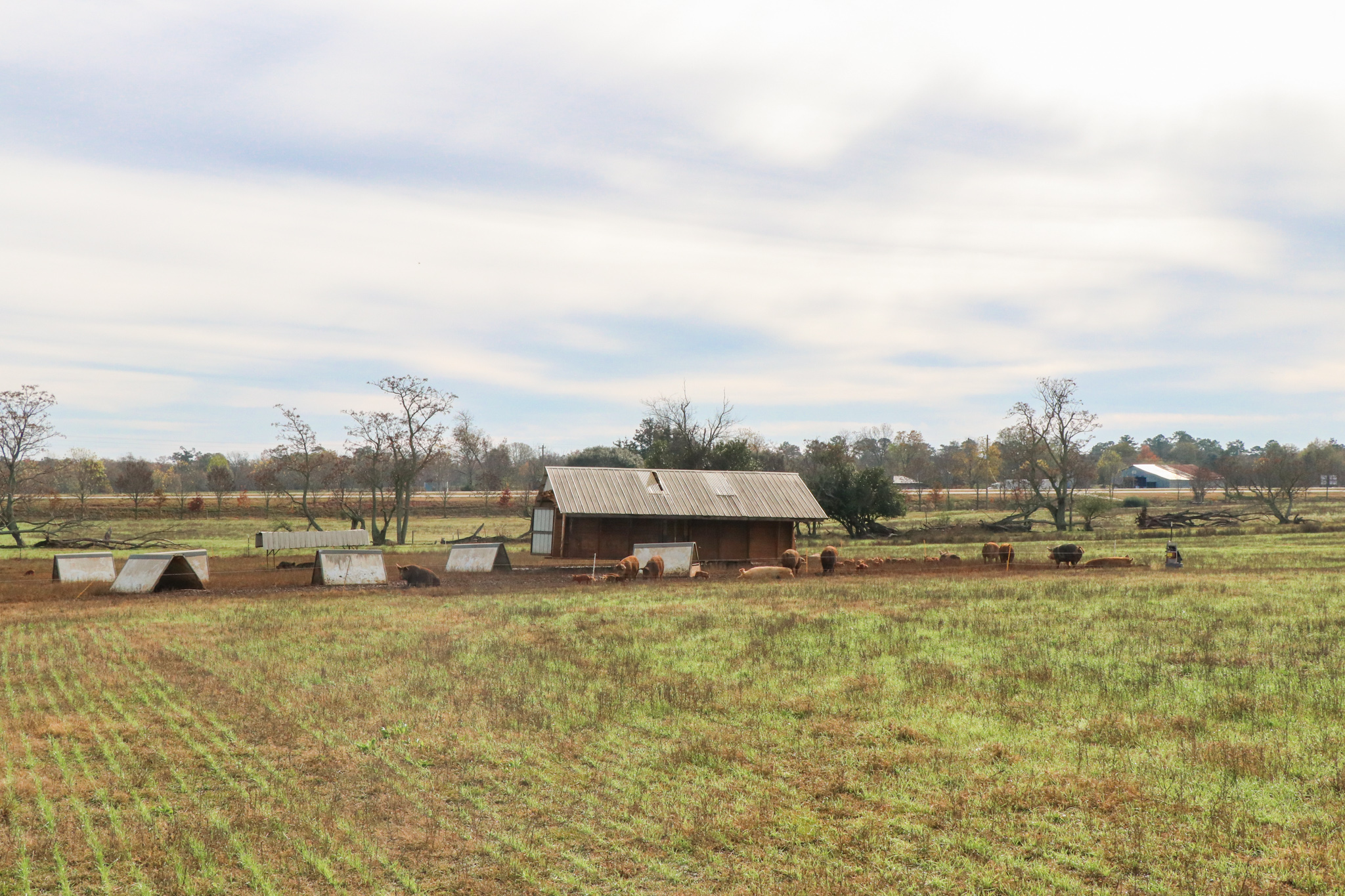
So, I reinvented my operation. I got rid of the confined indoor system, moved my hogs onto pasture, and shifted them to an antibiotic-free diet. That decision opened the door to a more diversified and profitable market: consumers seeking out healthy, humanely raised meat and willing to pay the extra cost that a superior production system requires.
I helped form a cooperative of hog farmers called Heritage Foods. Our hogs came out of the crates. Vet bills plummeted, mortality rates dropped, our pigs grew healthier and happier, our product quality improved, and our farm margins and resiliency increased.
When Prop. 12 passed in California, I became a Prop. 12-certified farm and saw that law as a significant opportunity to deliver the safe, high-quality, ethically produced pork demanded by consumers and capitalize on an economic opportunity for family pork producers like me.
Gestation crates are so widely condemned by consumers that McDonald’s, Burger King, Wendy’s, Kroger, and Costco have moved away from purchasing pork from producers who use them. Voters in Florida (2002) and Arizona (2006) were the first to support laws banning gestation crates.
Nationally, a 2025 survey found that 84 percent of Americans oppose gestation crates, and companies like Perdue Foods, Coleman brands, Hormel’s Applegate brand, North Country Smokehouse, Heritage Foods, True Story Foods, Niman Ranch, Clemens Food Group, ButcherBox, and thousands of American family farmers have all spoken out in support ofProp. 12.
The System We Have Works
Because of laws like those in California and Massachusetts, hog farmers have more diversified market opportunities. Why would Congress take this all away from us?
According to the “Big Pork” interests that are pushing the Save Our Bacon language, it’s about “saving” the failing U.S. hog industry. Yet the latest USDA Hog and Markets Report shows the industry is growing—with total pork production increasing by 1.4 percent in 2026 over 2025, and total 2026 pork exports predicted to increase 3.3 percent over 2025.
Prop. 12 and Question 3 haven’t raised pork prices for consumers either. Across the board, food prices have gone up nationally. Pork prices, however, have increased less than for other proteins.
An economic analysis of pork products that fall under Prop. 12 (bacon, boneless, and bone-in pork chops) comparing price increases between 2018 and July of 2023, before the legislation went into effect, to July 2023–July 2025, after it was enforced, found only “modest price increases through mid-2025, namely 8 to 11 percent range.” According to the same analysis, during that same two-year span, beef and chicken rose 26 percent and 24 percent, respectively, while the average CPI Food index rose by 19 percent.
As a farmer who cherishes my right to make the best decisions for my farm, I want to emphasize that Prop. 12 doesn’t force any farmer to comply. Farmers who are still in transition—phasing out their gestation crates for pens that meet Prop. 12 standards—or those who decline to change can still sell their pork in other markets. However, according to USDA data, over a quarter of U.S. hog farmers are either already Prop. 12–certified or transitioning, giving them access to the California and Massachusetts marketplaces as well as nationwide retailers that have pledged to eliminate pork raised in facilities using gestation crates from their supply chain. Those hog producers have invested millions in converting their operations, money that would be lost if the laws were repealed.
The company with the most to gain if these laws are overturned is Smithfield Foods, a China-owned conglomerate that controls a quarter of all of U.S. pork production. They prefer operating in a regulatory environment like China’s, where there are effectively no rules.
But dismantling state-level oversight would trigger a race to the bottom on food safety—the same sort of conditions that have produced the high-density hog “skyscrapers” crowding rural China’s landscape. By eliminating the state standards that the SOB Act targets, Congress would harm American family farmers who have built their businesses on food safety, community responsibility, and the kind of transparent, humane practices their customers demand.
From where I stand, the farm bill’s potential inclusion of the SOB Act is a serious threat to American family farmers. It hands power to large corporations while undercutting farmers who have invested in doing things the way their customers have asked them to.
I encourage everyone to call their U.S. senators today and tell them to oppose any farm bill that contains the Save Our Bacon Act. Every senator should work to stop this provision from becoming law—for the sake of your family’s dinner, and my family’s livelihood.
Russ Kremer is a Prop 12-certified fifth-generation Missouri hog farmer and head of partnerships at True Story Foods, a meat processor producing organic and natural cured meats sourced from sustainably raised, antibiotic-free, and humanely raised meat.