
Reposted from: https://barnraisingmedia.com/the-trojan-hog-in-the-farm-bill/
March 11, 2026
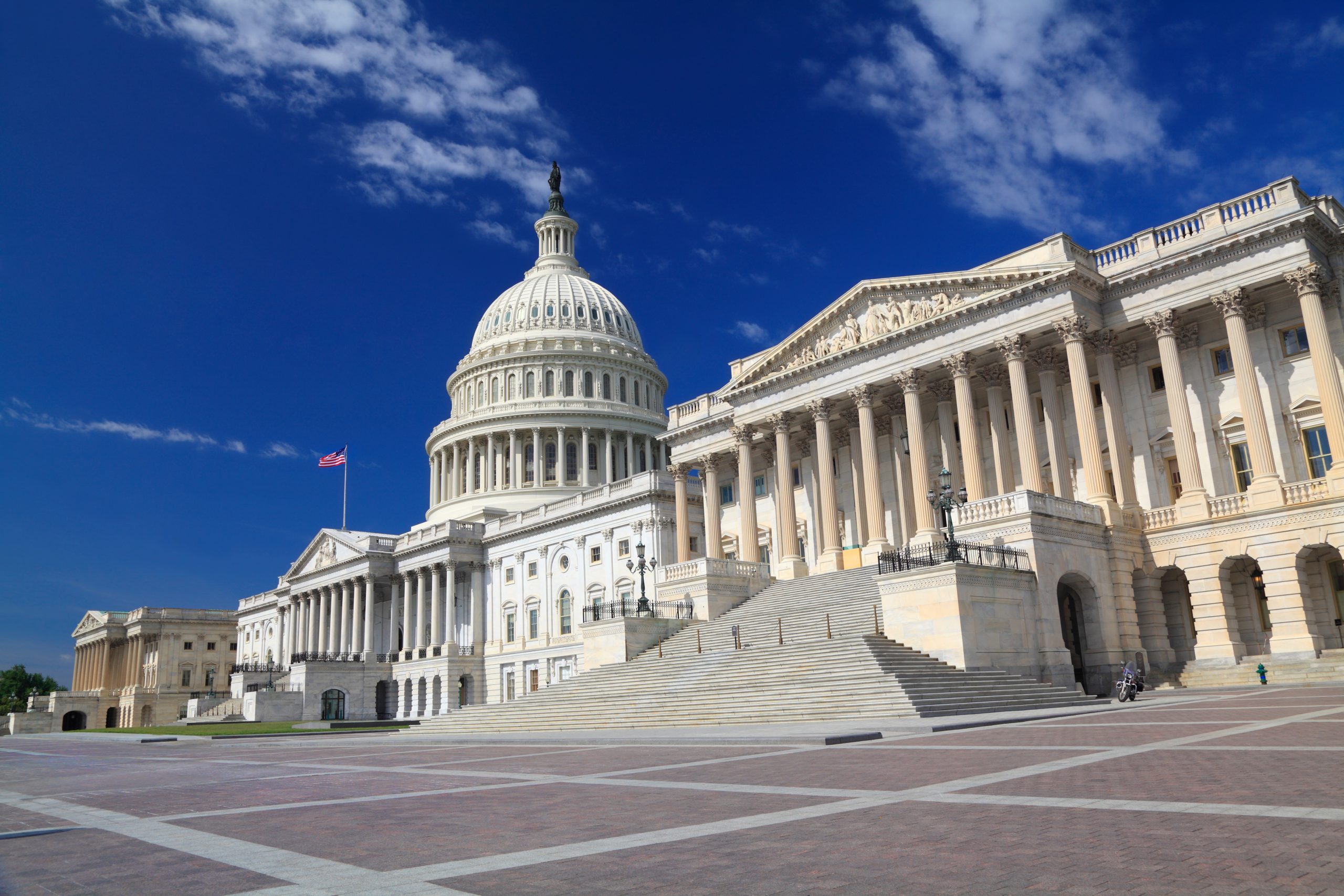
On October 8, 2025, more than 200 family farmers from 30 states drove flag-draped tractors around Capitol Hill and packed the National Press Club for a press conference. They were not there to ask for subsidies or protest trade policy. They were there to defend a pair of state animal welfare laws—California’s Proposition 12 and Massachusetts’ Question 3—from a piece of federal legislation with a cynically named bill: the Save Our Bacon Act.
This proposed legislation is not a targeted fix for interstate commerce for livestock producers, as its proponents claim. The Save Our Bacon Act is a Trojan horse—or rather, Trojan Hog—wheeled through Congress under an appealing name, concealing a legal framework for an unprecedented federal takeover of state agricultural law.
More sweeping than anything its name suggests, the legislation would prohibit states and localities from setting standards for agricultural products sold within their borders when those standards relate to how livestock is raised in other states.
The October rally also marked the launch of the American Meat Producer Association (AMPA), a new coalition of independent producers and meat companies formed specifically to counter the legislative and messaging apparatus of the National Pork Producers Council (NPPC).
The October event laid bare a rift within the pork industry that the bill’s sponsors would prefer to keep quiet. On one side: the NPPC and the largest industrial animal confinement operations. On the other: a growing movement of independent hog farmers, pasture-based producers and meat companies who see Prop 12 and Question 3 not as a regulatory burden but as a lifeline—a rare market mechanism that rewards smaller operations for meeting higher standards.
A Trojan Hog
The Save Our Bacon Act (H.R. 4673) was introduced in July 2025 by Rep. Ashley Hinson (R-Iowa-02). This legislation purports to lower grocery prices and ensure the “free movement” of interstate commerce—a rebranded version of the Ending Agricultural Trade Suppression, or EATS Act, introduced in 2023. Its title conjures images of imperiled breakfast tables and empty supermarket shelves. But American bacon is not under threat. Department of Agriculture (USDA) data presented at the October lobbying days confirmed no reduction in national pork supply and no supply chain disruptions from Prop 12 implementation. Retail pork prices have stabilized, with increases averaging under 10%—and pork remains roughly a quarter the cost of beef.
In essence, states, farmers and regulators would not know how to apply the law until federal courts interpret it case by case. And it would incentivize states to stop enforcing their own regulations rather than risk costly litigation, thus creating a race to the bottom that benefits the large industrial operations that seek deregulation.
Many lawmakers appear to be buying that framework whole hog. On March 5, after more than 20 hours of markup and debate, the House Agriculture Committee voted to advance the Farm, Food, and National Security Act of 2026, the Republican-backed farm bill text, by a vote of 34-17, with seven Democrats voting in support.
Consumer choice and the logic of state agricultural law
The debate over the Save Our Bacon Act is often framed as a contest between regulation and free markets. But the reality is the opposite. State agricultural laws, at their best, are expressions of consumer preference. When California voters passed Prop 12 in 2018, with 62.7% support, or when Massachusetts voters approved Question 3 in 2016, with 77.6%, they were not imposing arbitrary regulations—they were exercising market democracy. They were saying: we want the products sold in our state to meet certain standards, and we are willing to pay for them. That kind of consumer-driven standard-setting is precisely how markets are supposed to work.
This principle extends far beyond animal welfare. Could a state still require that imported cattle be tested for disease before crossing its border? That depends on whether a court considers disease testing part of “raising” or “movement.” Could a state enforce kosher or halal labeling? That depends on whether a court considers such labeling a “condition for sale” related to “production.”
State-level agricultural regulations have historically reflected the needs, values and preferences of local populations. Kosher food fraud laws in states like New York, New Jersey, Illinois and Maryland protect Jewish consumers from mislabeled products. Halal protections serve the same function for Muslim communities. These are consumer protection laws rooted in state authority—the same authority the Save Our Bacon Act would undermine. The Harvard Law School analysis specifically identifies kosher and halal labeling protections among the categories of state law that H.R. 4673 could block.
The analysis found more than a thousand state laws could be affected—including disease and pest prevention (such as protections against avian influenza and New World screwworm), food safety standards, dairy sanitation requirements, importation restrictions on livestock, consumer protection laws and pesticide regulation.
The Great Divide in pork
The October lobbying days made visible a fault line that has been widening in the pork industry for years. The dominant narrative pushed by the NPPC—that Prop 12 hurts all producers and creates a destructive patchwork of regulation—was directly contradicted by the farmers who showed up in Washington.
Brent Hershey, president of Hershey Ag, a Pennsylvania hog operation, told the rally that his Prop 12–certified farm had never operated better. Hershey, who spent four decades building and managing gestation crate systems before converting his operation, has become one of the industry’s most candid advocates for reform. He reported that real conversion costs on his farm ran $400–$800 per sow—roughly 10% of the $4,000 figure that opponents commonly cite.
Russ Kremer, a Missouri hog farmer and head of farm partnerships for True Story Foods, framed the issue in terms of survival. Kremer warned that rolling back Prop 12 would be “a move against family farmers” in an industry where consolidation has already eliminated the majority of independent operations.
Writing from D.C., Salatin zeroed in on the principle at the heart of the fight: “As much as I appreciate our farm’s pastured livestock, I want to focus on something different: the ability of a group to determine its own governance.” He argued that the Save Our Bacon Act was part of a broader pattern of federal encroachment that raises the stakes of every policy dispute to the national level, increasing partisan hostility while reducing the space for local experimentation.
These are not marginal voices representing a niche corner of the market. An estimated 27% of U.S. pork producers have already made or are working toward investments to access the Prop 12 market. The NPPC claims to represent all 60,000 pork producers, but the October rally demonstrated that a significant and growing number of those producers disagree fundamentally with the Council’s legislative agenda.
What Prop 12 and Question 3 mean for small producers
California’s Proposition 12 and Massachusetts’s Question 3 were approved by overwhelming voter majorities and have survived every legal challenge brought against them. The U.S. Supreme Court upheld Prop 12 in 2023, and in June 2025, the Court denied yet another petition challenging the law’s constitutionality, filed by the Iowa Pork Producers Association. Both laws set minimum space requirements for pigs, hens and calves, and prohibit the sale within their states of products from animals that do not meet those standards.
For small and mid-sized producers, these laws created something that the conventional commodity market rarely provides: it rewarded higher welfare standards with higher prices. Producers who invested in converting away from gestation crates gained access to the California and Massachusetts markets—and price premiums. That investment was not trivial. It required capital expenditure, facility redesign, changes to sow management practices and long-term planning. Producers made those investments because they believed the regulatory signals were durable—that the laws, having been approved by voters and upheld by the Supreme Court, would remain in place.
Michael Kovach, a Pennsylvania farmer and president of the Pennsylvania Farmers Union, put it plainly:
Overturning Prop 12 and other state animal protection laws would be an unprecedented federal overreach that takes power away from states and hands it directly to industrial agriculture, harming countless independent and family farmers in the process.
The foreign ownership question
One dimension of this fight that cuts across ideological lines is the question of who benefits from federal preemption. The “Big Four” companies that dominate U.S. pork production include Smithfield Foods, which was purchased by China’s WH Group in 2013. It now operates without a single American board member. Smithfield controls approximately one quarter of all U.S. domestic pig production. A second major player, JBS, is owned by the Brazilian Batista family, and is the world’s largest meat processing company. Along with Tyson and Hormel, these four companies control 70% of pork processing in the United States, according to Farm Action. Enacting a federal law that overrides state agricultural standards on behalf of these companies does not serve American farmers or American food sovereignty.
The 14 House Republicans who opposed the Save Our Bacon Act made this point directly, writing that the legislation “could further consolidate the influence of such foreign entities, granting them greater control over the U.S. agricultural sector and limiting the capacity of individual states to regulate their own food supplies.”
Bipartisan opposition in Congress
The Save Our Bacon Act faces notable opposition from within the majority party itself. In September 2025, 14 House Republicans—led by Reps. Anna Paulina Luna (Fla.-13), David Valadao (Calif.-22) and Andrew Garbarino (N.Y.-2)—sent a letter to House Agriculture Committee Chairman G.T. Thompson, urging him to exclude Save Our Bacon language from the farm bill. The signers also included Reps. Byron Donalds (Fla-19), Nancy Mace (S.C.-01), Brian Fitzpatrick (Pa.-01) and Michael Lawler (N.Y.-17), among others. The lawmakers wrote that Prop 12 and Question 3 play a critical role in ensuring fair competition, food safety and public trust, and that the legislation “disregards the principles of federalism and self-governance.”
By November, more than 180 House Democrats had joined in formal opposition, with Reps. Lateefah Simon (Calif.-12), Jim McGovern (Mass.-02) and Jim Costa (Calif.-21) leading a separate letter to the Agriculture Committee. Rep. Angie Craig (Minn.-02), the ranking Democrat on the committee, said that it would be unfair to change the rules on farmers who had already invested in Prop 12 compliance.
On March 5, Ranking Member Craig called the legislation “a shell of a farm bill” and warned it would struggle to attract bipartisan support.” Costa and Sharice Davids (Kan.-03) were among the seven Democrats on the committee who had signed the November letter in opposition but voted to advance the bill. They were joined by Don Davis (N.C.-01), Gabe Vasquez (N.M.-02), Adam Gray (Calif.-13), Kristen McDonald Rivet (Mich.-08) and Josh Riley (N.Y.-19).
The NPPC’s Orwellian messaging
The NPPC described the vote as “relief for pork producers facing an imminent patchwork of state animal housing laws spurred by California Proposition 12, a state law that puts small farmers on the chopping block, increases the risk of industry consolidation, and undermines states’ rights.”
That language is remarkable. Protecting small farmers, resisting consolidation, and defending states’ rights have been the central arguments against the Save Our Bacon Act. The NPPC has taken its opponents’ arguments and claimed them as its own, without evidence.
The NPPC’s membership is dominated by the largest confinement operations in the country, including suppliers to Chinese-owned Smithfield Foods. Federal preemption would eliminate the market differentiation that allows smaller operations to compete, accelerating the very consolidation the NPPC claims to oppose. And Prop 12 is a state law, passed by voters and upheld by the Supreme Court. The Save Our Bacon Act is the very instrument that would undermine states’ rights.
NPPC president Duane Stateler urged the House to “finish the job” and give producers “true freedom to farm.” The farmers at the Capitol would argue that “freedom to farm” means the freedom of states to set standards, consumers to choose, and independent producers to compete—not the freedom of the largest corporations to operate under the lowest common denominator while Congress strips away every standard in their way.
Where things stand
The Farm, Food, and National Security Act of 2026, with the Save Our Bacon Act embedded inside. It will now go to the House floor for a full vote.
House leadership is targeting a floor vote before the Easter recess beginning March 28. But the path from committee to floor vote is not guaranteed. The House Republican majority is just seven seats, at least 24 Republicans have publicly opposed the Save Our Bacon Act. The farm bill contains other controversial provisions—including a pesticide industry liability shield and SNAP cuts—that have drawn opposition from across the political spectrum.
The last full farm bill was passed in 2018. Farm bills are typically negotiated in five-year cycles, and lawmakers have been fighting over the farm bill’s renewal since 2023, to little success. In July 2025, the One Big Beautiful Bill bypassed the traditional bipartisan farm bill process when it injected $59 billion to support commodity “safety net” programs in Title I and Title XI of the farm bill.
Previous iterations of this legislation—the King Amendment, the Protect Interstate Commerce Act, the EATS Act—have failed in every Congress dating back nearly 15 years. Each time, a combination of bipartisan opposition, public outcry, and the sheer overreach of the language kept it from becoming law. But its Big Ag and corporate lobbyist backers keep trying, and the stakes grow each time, because each time more producers have invested in compliance with the very laws this bill would erase.
How to take action
A broad coalition of organizations is mobilizing against the Save Our Bacon Act. The American Society for the Prevention of Cruelty to Animals (ASPCA), the Animal Legal Defense Fund, Animal Wellness Action, the Center for a Humane Economy and the newly formed American Meat Producer Association are all actively engaged in lobbying, public education, and grassroots organizing. The Humane Society of the United States and numerous state-level organizations are also part of the effort.
Their efforts appear to be working. In a sign of growing alarm, Big Ag interests have taken to coordinated smear campaigns to members of the Defeat EATS Coalition. In January, the deceptively named Center for the Environment and Welfare—a “think tank” that is a front group created by the public relations agency Berman and Company—launched a campaign to smear the nonprofit Farm Action in an apparent attempt to counter the Farm Action Fund’s farmer-led campaign supporting Prop 12. The Center for the Environment and Welfare has also recently led similar campaigns against ASPCA and Humane World for Animals, claiming they are “quietly shutting down animal agriculture.”
The Save Our Bacon Act was never about bacon. It is about whether a handful of industrial confinement operations and their allies in Congress can use federal power to override the democratic choices of voters, destroy the investments of thousands of family farmers, undermine state consumer protections—from animal welfare to religious food standards—and consolidate control over American agriculture in fewer and fewer hands, some of them foreign-owned. The farmers who drove their tractors to Capitol Hill in October made their answer clear. Now it is up to the rest of us to make ours heard.
Individuals can take action by contacting their representatives directly—by phone, email or through the action portals maintained by Farm Action Fund, ASPCA (aspca.org), the Animal Legal Defense Fund (aldf.org) and Animal Wellness Action (animalwellnessaction.org). The message is straightforward: urge your member of Congress to strip the Save Our Bacon Act from the farm bill and to oppose any federal preemption of state agricultural and animal welfare laws.
Michael Burns is a pastured hog farmer in Schuyler County, New York, and previously a cofounder of the Finger Lakes Permaculture Institute and a high school U.S. History teacher.